ServicesWell Water Treatment
Well Water Treatment in Oldsmar, FL
Rotten egg odor at the tap, rust rings in the toilet, white scale on the shower glass. We start by checking your well equipment and how the water behaves in your home, tell you plainly what we find, and only then suggest treatment that fits.
Treatment Built Around Your Well
A private well is not city water. Nobody treats it before it reaches your tap, so whatever the ground puts in it comes straight into your home. In this part of Florida, that often means sulfur, iron and hardness from the limestone the water sits in. Some wells have one of these. Many have two or three.
Each problem needs its own fix, and the order matters. Iron left in the water will foul a softener. A carbon filter alone will not stop a strong sulfur smell. So we don't start with a product. We start by looking at your pump, pressure tank, plumbing and fixtures, and at any lab report you already have.
Then we tell you what we found and what we'd do about it. If a simple filter will handle it, that's what we say.
What the Work Covers
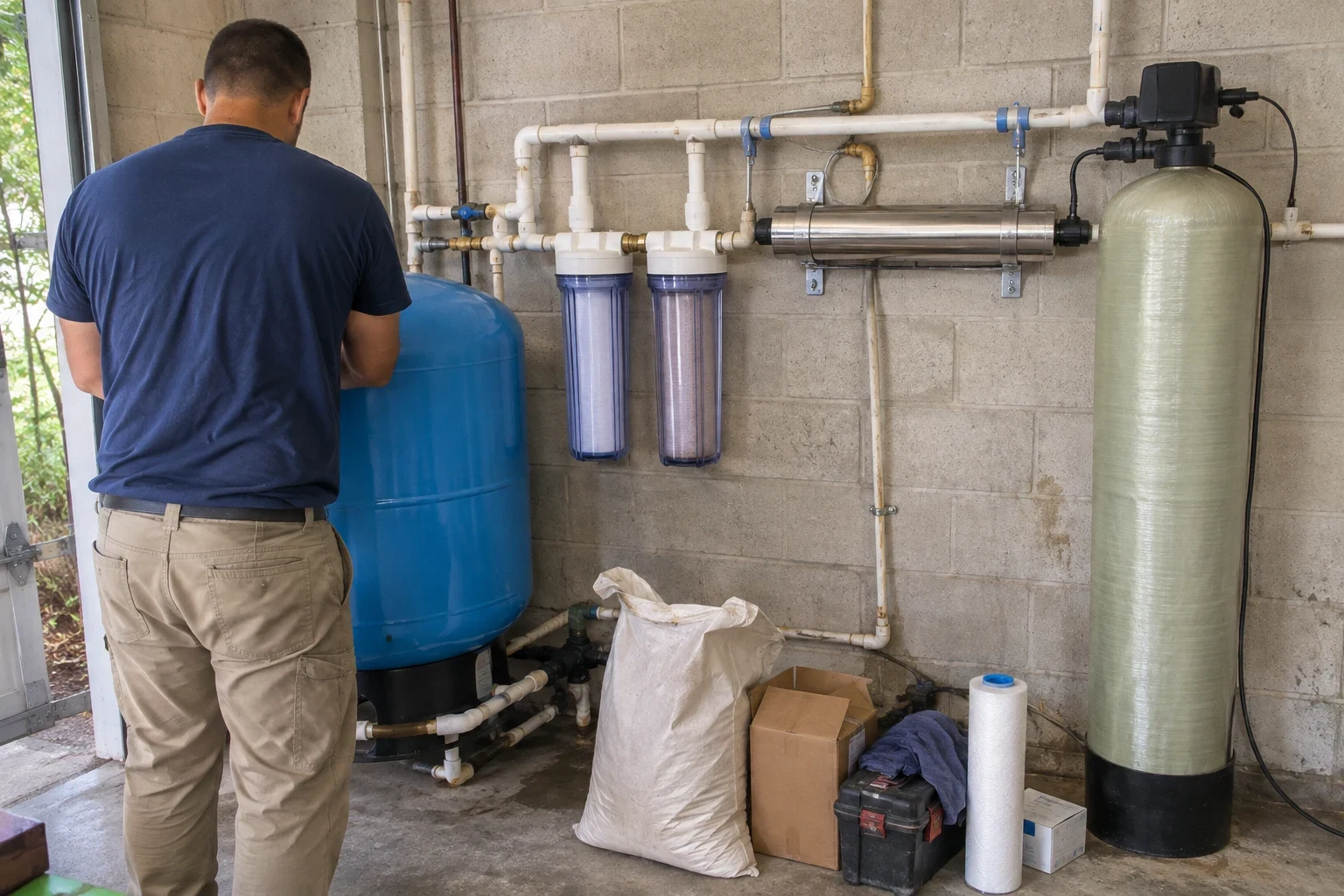
A look at your well setup
We check the pump, pressure tank, pressure switch and the plumbing where a system would tie in. We note flow, available space, drain access and power.
Sulfur and odor treatment
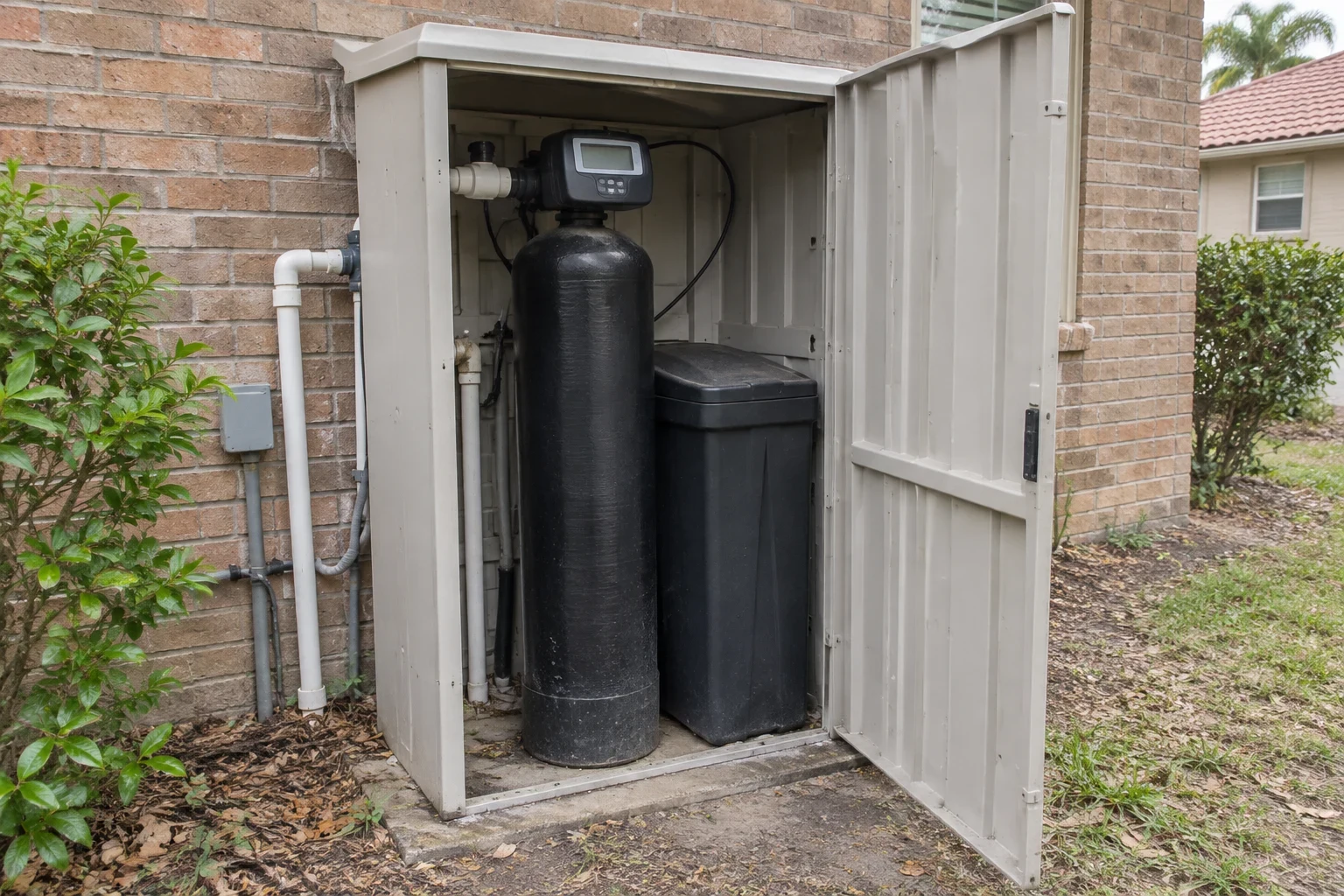
For the rotten egg smell, we use systems that oxidize the hydrogen sulfide so it can be filtered out. This handles smell at every tap, not just the kitchen.
Iron and manganese removal
Orange and black stains come from dissolved metals. An iron filter catches them before they reach your fixtures, laundry and water heater.
Hardness and sediment
If scale is part of the picture, a water softener can follow the iron filter. Sand and grit get a sediment filter up front so the rest of the system lasts.
Clean install and a walkthrough
We protect floors, clean up when we're done, and show you the bypass valve, the settings and what upkeep looks like.
Signs Your Well Water Needs Treatment
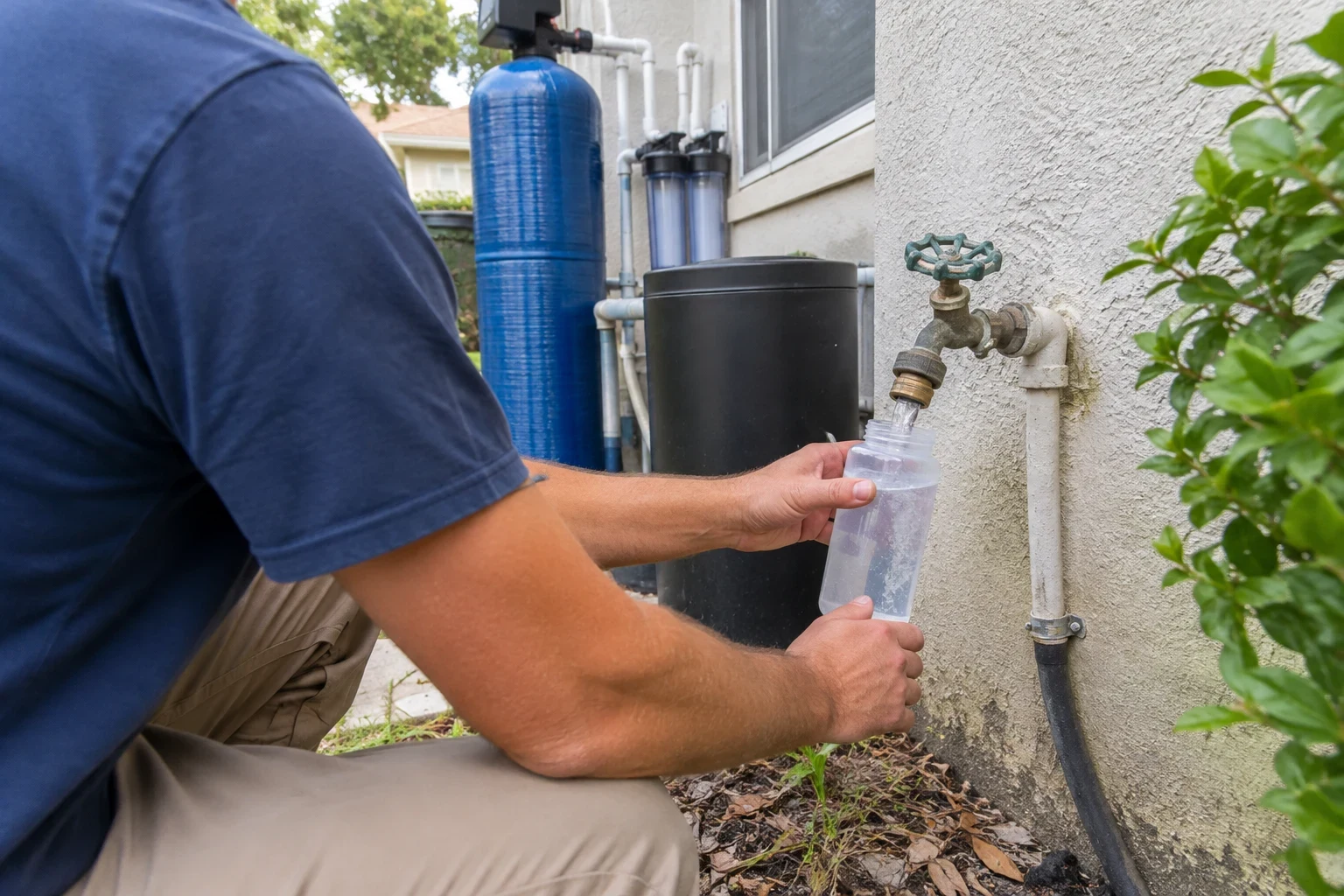
- Rotten egg smell
- That's hydrogen sulfide. It's often worse in hot water and first thing in the morning.
- Orange or rust stains
- Stains in toilets, tubs and on the driveway from sprinklers point to iron. Bleach won't keep them away.
- Black specks or gray staining
- This usually means manganese. It can also leave dark residue in the toilet tank.
- White crust and spotty dishes
- Hard water leaves scale on faucets and shower glass. Over time it builds up inside the water heater too.
- Grit in aerators
- Sand or sediment clogging faucet screens means the water needs filtering before anything else.
- Old equipment that stopped working
- If the smell or stains came back with a system already in place, it may be undersized or worn out. We cover that on our Water Softener & Filtration System Replacement page.
How a Well Water Job Goes
- 1
Call and describe the problem
Let us know what's going on: the smell, the stains, the spots on the glass. We'll pick a time that works to come by.
- 2
Inspection comes first
At your home, we check the pump, pressure tank, plumbing and the fixtures giving you trouble. Have a lab report already? We'll go through it together.
- 3
Findings you can follow
We walk you through what's behind each problem and which piece of equipment handles it. The estimate is written out item by item, and there's no rush to decide.
- 4
The installation
Most jobs take part of a day. We'll let you know ahead of time when the water has to be shut off for the tie-in.
- 5
Setup and ongoing support
We program the system for your water and your household, then confirm it's working the way it should. You also get ongoing customer support for maintenance, filter replacements, and service needs.
What Moves the Price
Well treatment ranges from one filter to a full train of equipment. The price depends on what your water needs and how your home is set up. We give you a written estimate after we look, not before.
- How many problems
- Sulfur alone takes less equipment than sulfur, iron and hardness together. Each issue can add a stage.
- How much water you use
- Household size and the well's flow rate set how large the system needs to be. Undersized equipment lets the problem slip through.
- Where it goes
- Space, drain access and power near the pressure tank all matter. Tight spots or a long run to a drain add labor.
- Old equipment
- Removing a failed system or fixing worn plumbing at the tie-in adds time.
Well Water Treatment Questions
- Why does only my hot water smell like eggs?
- That's often the water heater, not the well. The anode rod can react with sulfur and bacteria in the water and make the smell. We check this before recommending a whole system, because sometimes swapping the anode is the real fix.
- Will a treatment system lower my water pressure?
- A properly sized system shouldn't cause a noticeable drop. Pressure problems usually come from equipment that's too small for the flow or filters that need changing. We size to your well and your household to avoid that.
- Can I just use a water softener on my well?
- Sometimes, but not if there's much iron or sulfur. Those foul the softener resin and the problem comes back. If hardness is the only issue, a softener may be enough, and you can read more on our Water Softeners page.
- Should I also get reverse osmosis for drinking water?
- It depends on your findings. Some well owners want an extra step at the kitchen sink for drinking and cooking. Our Reverse Osmosis page covers how that works, and we'll tell you honestly if you don't need it.
- How much upkeep does a well system need?
- Most need filter changes and an occasional check of settings. Some sulfur systems need a refill or media change every few years. We go over the schedule for your setup before we leave.
Find Out What's Going On With Your Well
Tell us what you're dealing with and we'll come look before suggesting anything. We serve Oldsmar and nearby towns like Palm Harbor and Westchase.