ServicesSoftener Repair & Maintenance
Water Softener Repair & Maintenance in Oldsmar
When your softener stops doing its job, we open it up and look before we suggest anything. You get a plain account of what failed and why. Then we fix that part, or tell you straight if the unit is past saving.
Most softener trouble is one small part
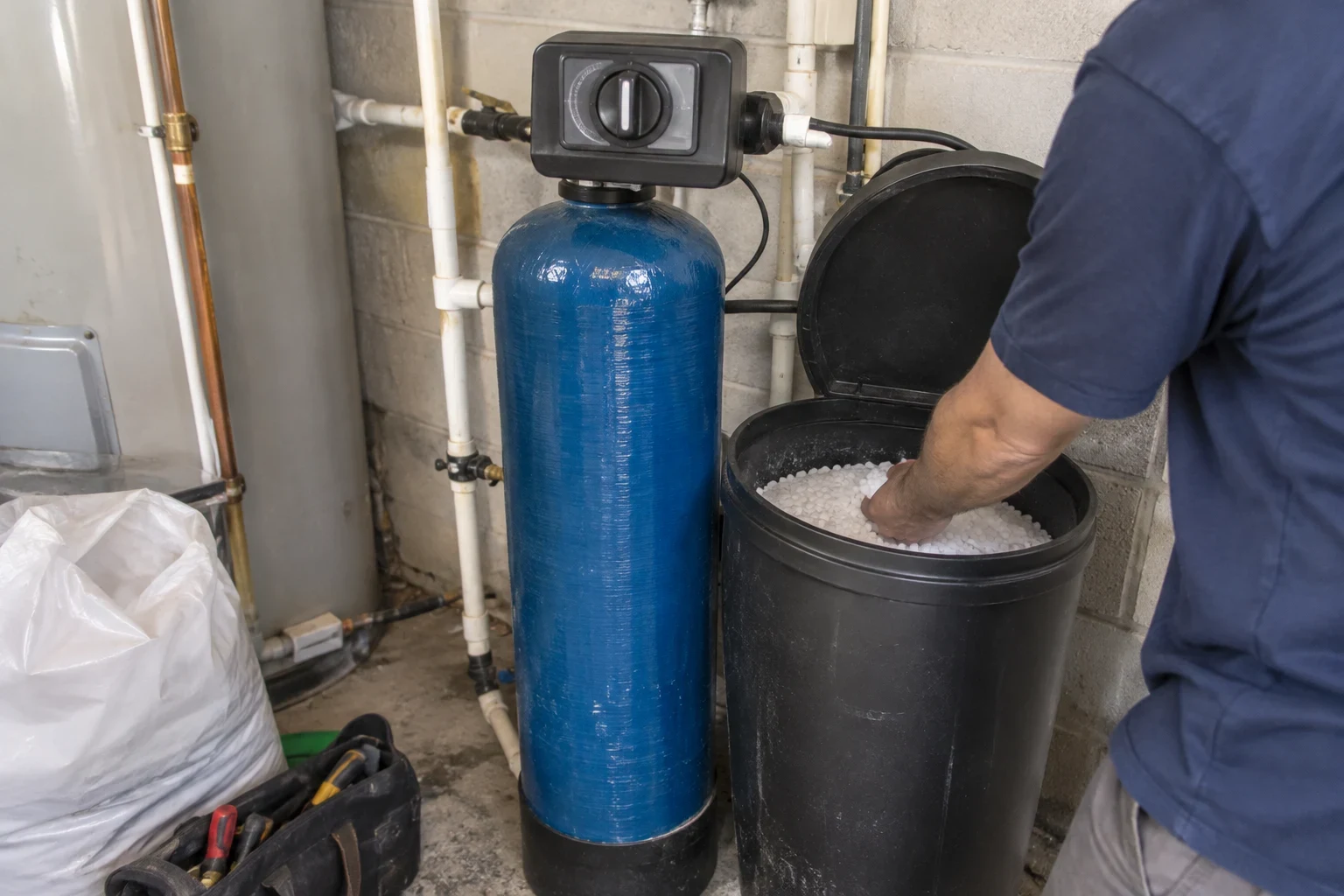
A water softener is a simple machine. A control valve, a tank of resin beads and a brine tank with salt. When it acts up, the cause is usually one of a short list: a salt crust, a clogged injector, a worn seal, a valve that lost its settings. Those are repairs, not a reason to buy a new system.
We work on your home's softener the same way every time. We look at each part, run a regeneration if it helps us see the fault, and tell you what we found in everyday words. You decide what happens next.
Regular maintenance keeps those small problems from growing. A cleaned brine tank and a clear injector let the resin recharge fully, so your water stays soft and the salt bag lasts as long as it should.
What a repair or service visit covers
- Brine tank check and cleanout
- We break up salt bridges and scoop out the mushy salt that settles at the bottom. Then we check the float and the brine line so the tank fills and draws the way it should.
- Injector and screen cleaning
- The injector is a small part with a tiny opening. Sediment and salt grit plug it, and the softener stops pulling brine. We take it apart and clean it.
- Control valve and settings
- We check the timer, the regeneration schedule and the hardness setting on the valve. We look at the seals, spacers and piston for wear and replace what is worn.
- Resin condition
- Resin can get coated with iron or worn down by chlorine over the years. We look for signs of that and tell you whether a resin cleaner will help or the bed needs replacing.
- Bypass, drain line and connections
- A bypass left half open or a kinked drain line causes more calls than you would think. We check both, along with the fittings and O-rings for slow leaks.
Signs your softener needs service
Spots and scale are back
Cloudy glasses and a white crust around the faucets tell you hard water is slipping past the softener. Either it has stopped regenerating, or it is going through the cycle with no salt to work with.
The salt level never drops
You top off the salt, and weeks later it looks the same. That often means a hard crust has formed above the water line or the injector is plugged. The valve still cycles, but the resin never gets recharged.
Standing water in the salt tank
Some water at the bottom is normal. When it rises close to the top, look for a float that is stuck, a brine line that is clogged or trouble in the valve. Left alone, that tank can spill onto the floor.
Salty taste at the tap
Softened water should not taste like salt. When it does, the rinse step is cutting short, usually because a valve part is worn or the drain line is restricted.
Low pressure through the house
Resin that is fouled or broken apart can choke the flow to every fixture. Small tan beads caught in a faucet screen mean something inside the resin tank has cracked.
Wrong time after a storm
Summer storms cut the power, and some valves forget the clock when that happens. The softener may then run its cycle at midday or skip it entirely.
How a repair visit goes
- 1
You tell us what you see
On the phone, describe the symptoms and, if you can, read us the brand and model off the valve. That helps us bring the likely parts.
- 2
We inspect the whole unit
We start at the brine tank and work back through the injector, valve, resin tank and drain. We do not stop at the first problem, because two faults often show up together.
- 3
Plain findings, then your call
We show you what we found and explain what it means for your water. If a repair makes sense, we say so. If the unit is near the end, we tell you that too and you choose.
- 4
Repair and a test cycle
Once you agree, we make the repair and run a manual regeneration. We watch it draw brine and rinse before we call the job done.
- 5
Clean up and settings
We set the clock and schedule for your household, wipe up any water and take the old parts with us if you want.
What sets the cost of a softener repair
We tell you what the repair involves before we start, so the price is not a surprise. The cost depends mostly on what we find. A cleanout and adjustment is a short job. A worn valve or tired resin takes more time and parts.
- Which part failed
- Cleaning an injector or breaking up a salt bridge is mostly labor. Seals, a motor or a full valve head add parts.
- Age and model of the unit
- Parts for common valves are easy to get. Older or less common units can take longer to source, and sometimes that tips the answer toward replacement.
- Resin condition
- If the resin only needs cleaning, that is a small add-on. Replacing the whole resin bed is a bigger job.
- Where the softener sits
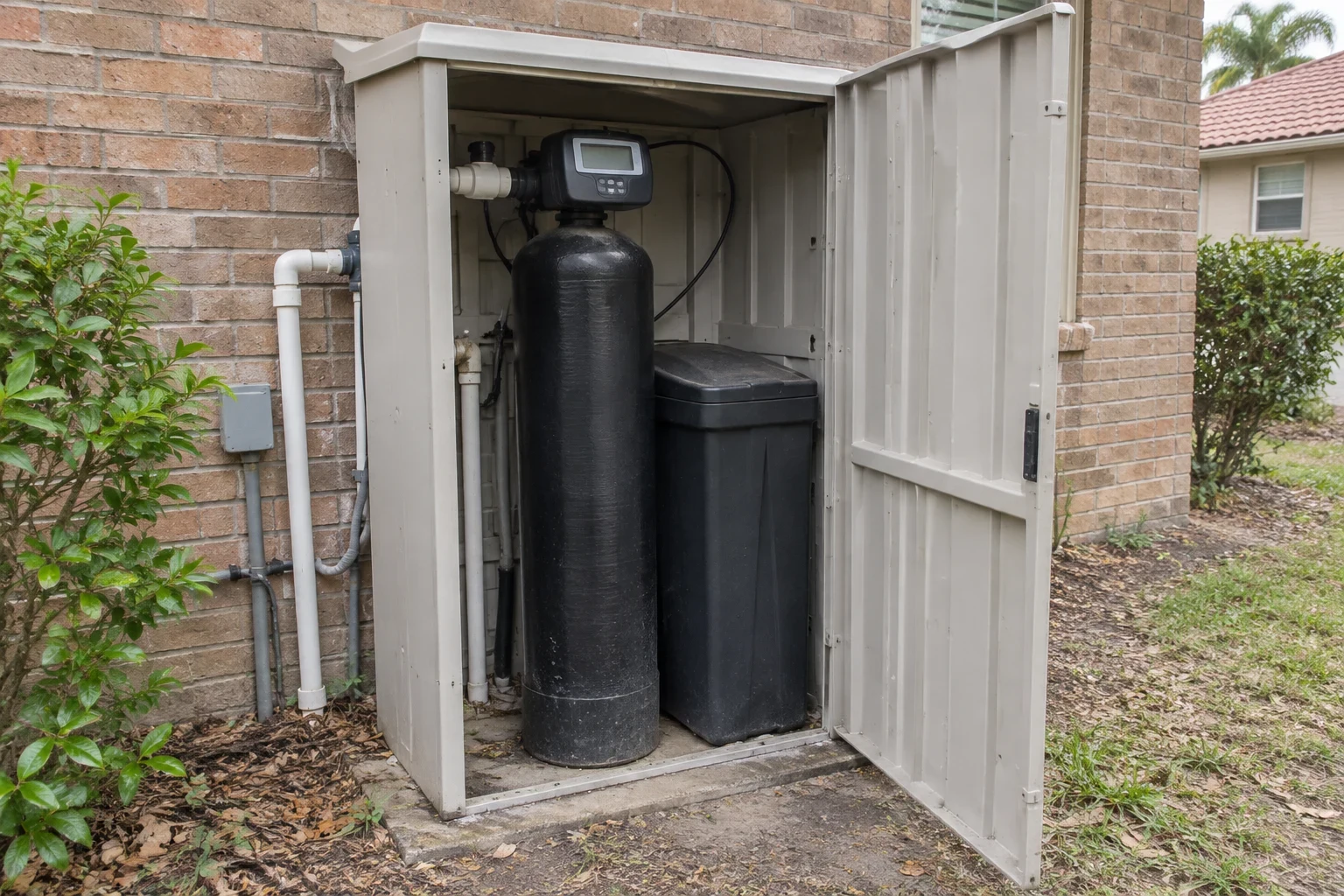
- A unit in an open garage is quick to work on. A tight closet or a spot with little room to drain the tanks adds time.
Softener repair questions
Something not covered here? (813) 358-6770
How often should my softener be serviced?
Once a year is a good habit for most homes. That visit catches salt buildup, a dirty injector and worn seals before they stop the unit. If your brine tank sits somewhere humid, salt crusting can happen faster, so check it between visits.
Is my old softener worth repairing?
Often it is. A softener with a sound tank and a common valve can run well for a long time with new seals or a cleaned injector. If the tank is cracked, the resin is shot and parts are hard to find, we will tell you plainly. Our Water Softener & Filtration System Replacement page covers that route.
Can you work on a softener someone else installed?
Give us the brand and model on the call. We will tell you honestly whether we can service it before we come out.
Why is my softener using so much salt?
Usually the schedule is set too often or the hardness setting is too high for your home. A leaking valve can also send brine down the drain. We check the settings and the valve and adjust what is off.
What kind of salt should I use?
Clean pellets or crystals made for softeners work best. Rock salt leaves more dirt in the tank, which ends up in the injector. If your unit is already giving you trouble, mention the salt you use when we visit.
Do you help after the repair?
Yes. We offer ongoing customer support for maintenance, filter replacements, and service needs. If something seems off later, call and tell us what you are seeing.
Get your softener working again
Tell us what your softener is doing and we will set up a visit. We look first, explain what we find and fix only what needs it. We serve Oldsmar and nearby towns like Palm Harbor, Safety Harbor and Westchase.