ServicesReverse Osmosis
Reverse Osmosis Systems in Oldsmar
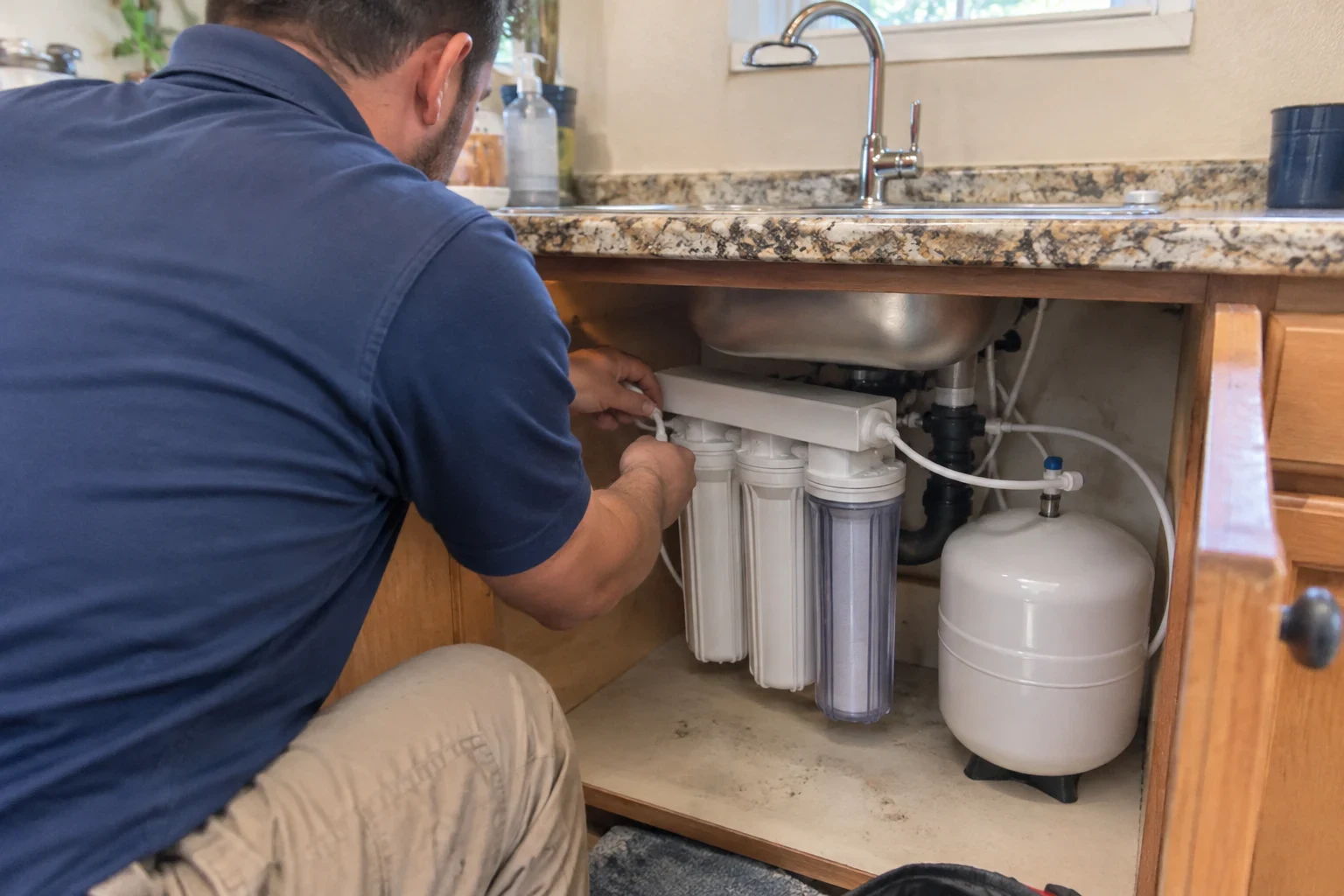
An under-sink reverse osmosis system gives your kitchen a separate tap just for drinking and cooking. Before we suggest one, we check your cabinet space, shutoff valves and water pressure. You hear what we found in plain words, and whether RO is a good fit for your home.
What reverse osmosis does, and when it makes sense
Inside an RO unit, your water pressure pushes water across a membrane with openings far smaller than a hair. Salts, metals and other dissolved material can't get through, so they're rinsed off to the drain. The treated water fills a small storage tank in the cabinet and feeds its own faucet next to your main one.
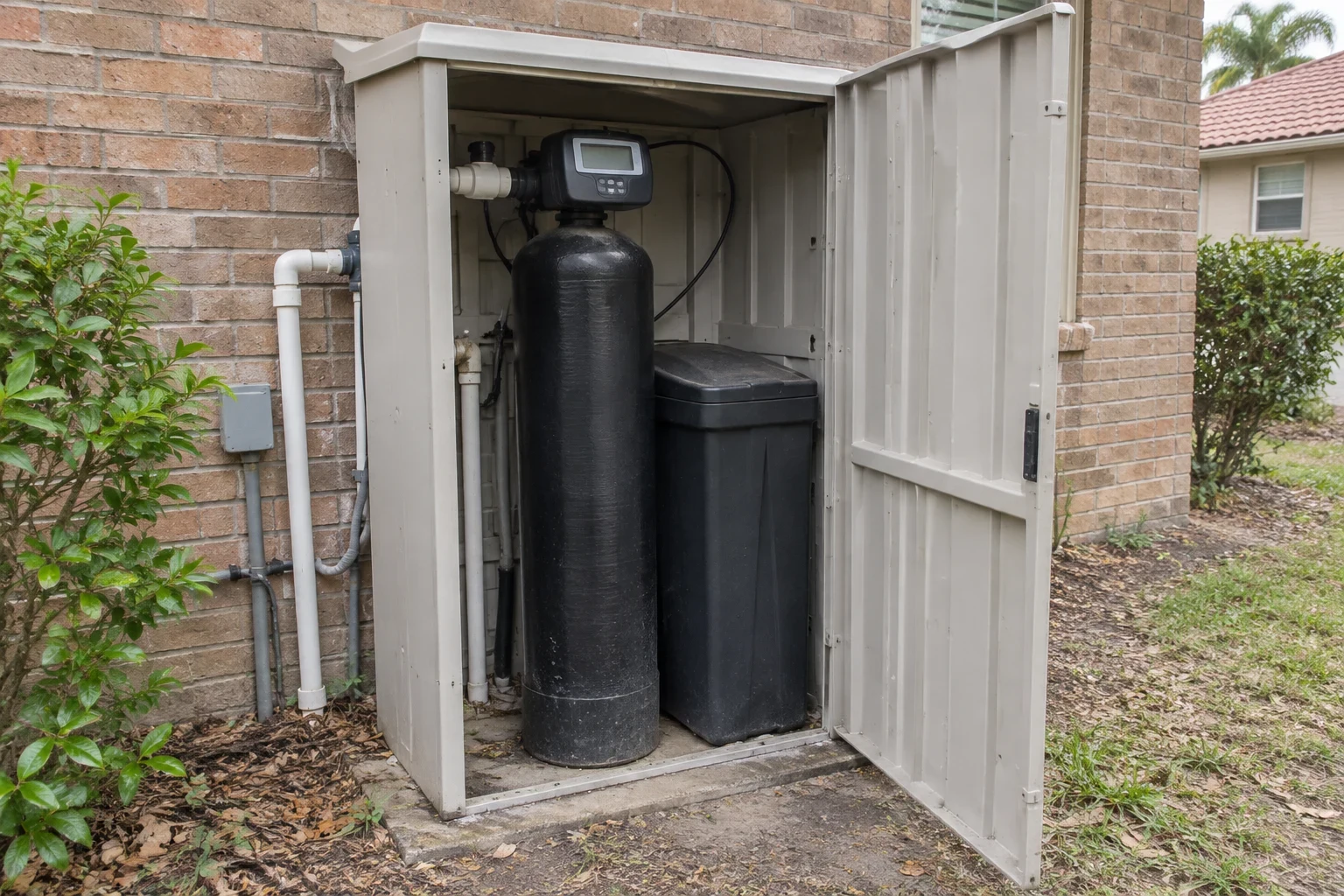
This is a system for the water you drink, not for every tap in the house. It's a good match if you buy bottled water, dislike how your tap water tastes in coffee or ice, or want another layer of protection because the plumbing in your home is older. If the trouble is a chlorine smell in the shower or scale on every fixture, start with our Whole-Home Filtration or Water Softeners pages instead.
We don't pick a system before we've seen yours. Sometimes a simple carbon filter takes care of the complaint. When RO is the better answer, we explain why without the sales pitch.
What the job includes
- 01
Checking the cabinet before anything else
We look at the cold shutoff, the drain line, the room you have under the sink and your water pressure. A shutoff valve that won't fully close gets pointed out before any work starts.
- 02
A system sized to your use
We size the unit to how much drinking and cooking water your household goes through. A big family needs more capacity than two people who mostly make coffee.
- 03
Prefilters ahead of the membrane
A sediment filter and a carbon filter sit in front of the membrane. They catch grit and chlorine so the membrane lasts longer and can do the fine filtering.
- 04
Its own faucet at the counter
Plenty of sinks already have a spare opening, often left over from an old sprayer or a soap pump, and the new faucet can go right there. No spare opening means drilling one. Before we touch your countertop, we explain where the hole would go and what it involves.
- 05
Optional line to the fridge
When the refrigerator sits close enough, we can feed RO water to the ice maker and door dispenser. If the run is too long to make sense, we'll say so.
- 06
Flush, leak check and cleanup
We flush the new system, look over every fitting for drips and wipe out the cabinet. Before we go, you'll know where the filters sit and how to turn the system off.
Questions about Reverse Osmosis?
Call(813) 358-6770Signs an RO system could help your home
You haul bottled water
If cases of water stack up in your garage, an under-sink system usually replaces that habit and the trips to the store.
Coffee and tea taste off
A flat or chemical taste in hot drinks often comes from what's dissolved in the water. RO strips most of it out.
Cloudy ice or spotted glasses
Minerals in the water show up as cloudy cubes and white rings on glassware. Drinking water from RO comes out much cleaner.
Older plumbing in your home
Older pipes and fittings can add metals to water sitting in the lines. An RO system at the kitchen tap adds a layer of protection where you drink.
An aging RO unit that drips or slows
If you already have a system that fills slowly or leaks, we can look at it. Sometimes it needs filters, sometimes it's time for a new one, and we'll tell you which.
How an install day runs
- 1
You call us
Tell us what's bothering you about your water and what's under your sink now. We set a time to come out and look.
- 2
We inspect and explain
We check the cabinet, shutoffs, drain and pressure, and look at any existing filters. You get our findings in plain words and a written estimate before any work is scheduled.
- 3
We install
We shut off the cold line, add a feed valve, fit the drain saddle and mount the tank and filter housings. Then we set the faucet. Most kitchens take a few hours.
- 4
We flush and check
New membranes need a flush before you drink from them. We run the system, check every connection for leaks and show you how it works.
- 5
We stay available
We offer ongoing customer support for maintenance, filter replacements, and service needs. When filters are due, a phone call gets it handled.
What moves the price
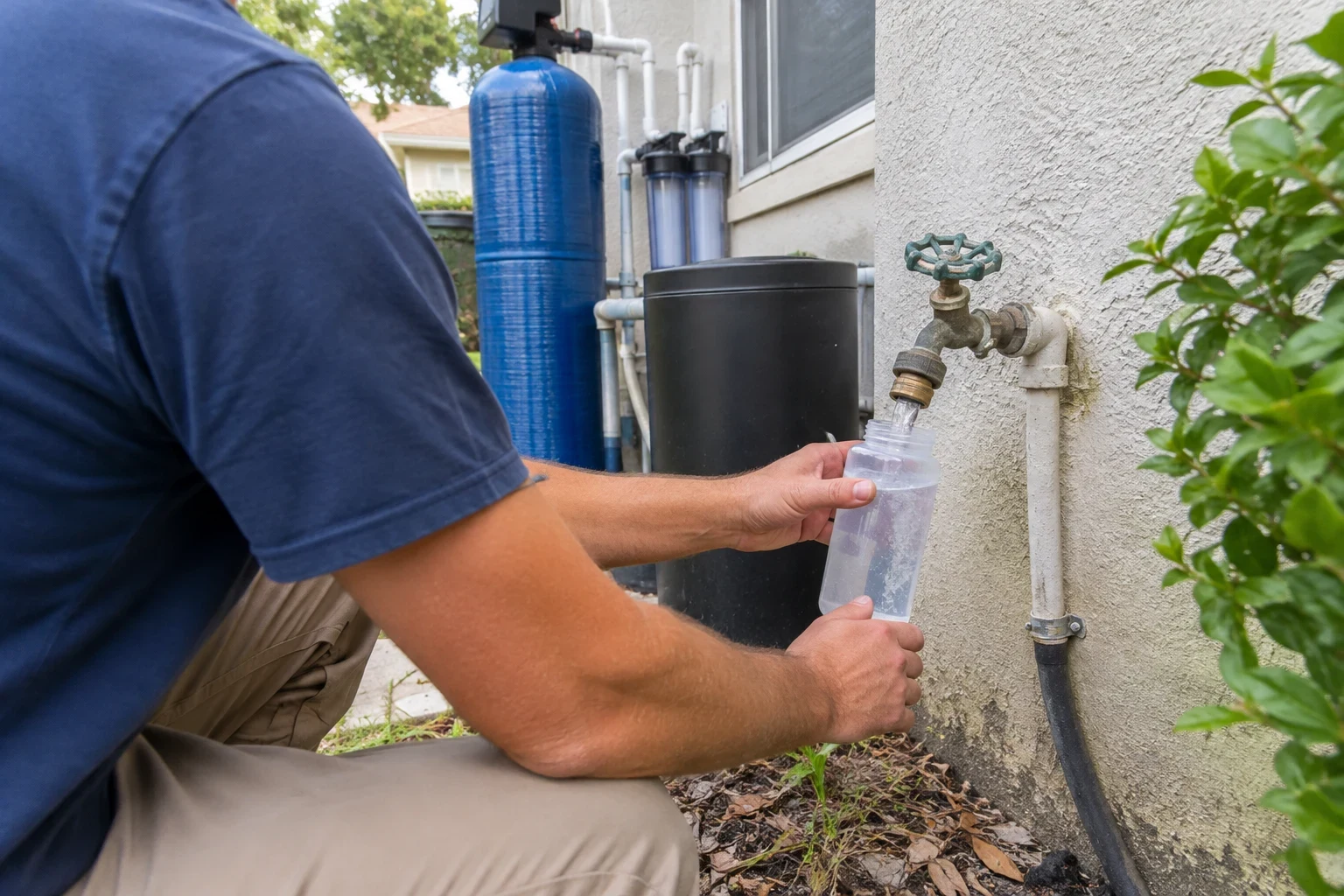
An RO install has a few moving parts, and the price follows them. We give you a written estimate after the inspection, so you know the number before we start. No add-ons show up later.
- The system itself
- Number of filter stages, tank or tankless design and whether you want a remineralizing filter all change the cost.
- Your countertop
- Using an existing hole costs less than drilling. Stone and quartz take more time and care to drill than laminate.
- Plumbing condition
- Corroded or stuck shutoff valves should be replaced before we tie in. We'll show you what we found and why.
- Low water pressure
- RO needs enough pressure to work well. If yours runs low, a small booster pump may be needed.
- Fridge connection
- Running a line to your refrigerator adds tubing, fittings and labor, more so if the fridge is across the kitchen.
Reverse osmosis questions
Does reverse osmosis waste water?
Some, yes. Part of the water goes to the drain to keep the membrane rinsed clean. Newer units send less down the drain than older ones did, and we'll go over that tradeoff for whatever model we suggest.
Will RO water taste flat?
Some people say it does, since the membrane pulls out minerals along with everything else. A remineralizing filter adds back a little calcium and magnesium after the membrane. If you like that taste better, we can include one.
How often do the filters need changing?
Most prefilters get swapped once or twice a year. A membrane usually runs a few years. Your water and how much you use both play a part. We'll leave you a schedule, and we can do the changes for you.
I already have whole-home filtration. Do I still need RO?
Not always. A whole-house carbon system takes care of chlorine taste at every faucet. RO takes drinking water a step further. We'll check what's in place and tell you straight whether RO adds enough to be worth the cost.
Will the RO faucet be slower than my regular tap?
It pours more gently, because it draws from the storage tank. A glass or a pot still fills fast. After a lot of use the tank may run low, and it refills by itself over a few hours.
Find out if RO fits your kitchen
We'll look under your sink, check your pressure and tell you what we see. If RO isn't the right answer, you'll hear that too.