ServicesChlorine & Chloramine Removal
Chlorine & Chloramine Removal in Oldsmar
Your tap water is disinfected for good reason, but you don't have to drink it, cook with it or shower in it. We look over your home's plumbing and current equipment first, tell you plainly what we see, and only then suggest a system that fits.
What this service does
City water is treated with chlorine or chloramine so it stays safe on the way to your house. That part is fine. The leftover taste and smell in your glass, coffee and shower is what most people want gone.
The two chemicals act differently. Chlorine breaks down fairly easily, and standard carbon removes it well. Chloramine is chlorine bound with ammonia. It lasts longer in the pipes, and it needs a specific kind of carbon and more contact time to remove. A filter built for chlorine can let chloramine slip through.
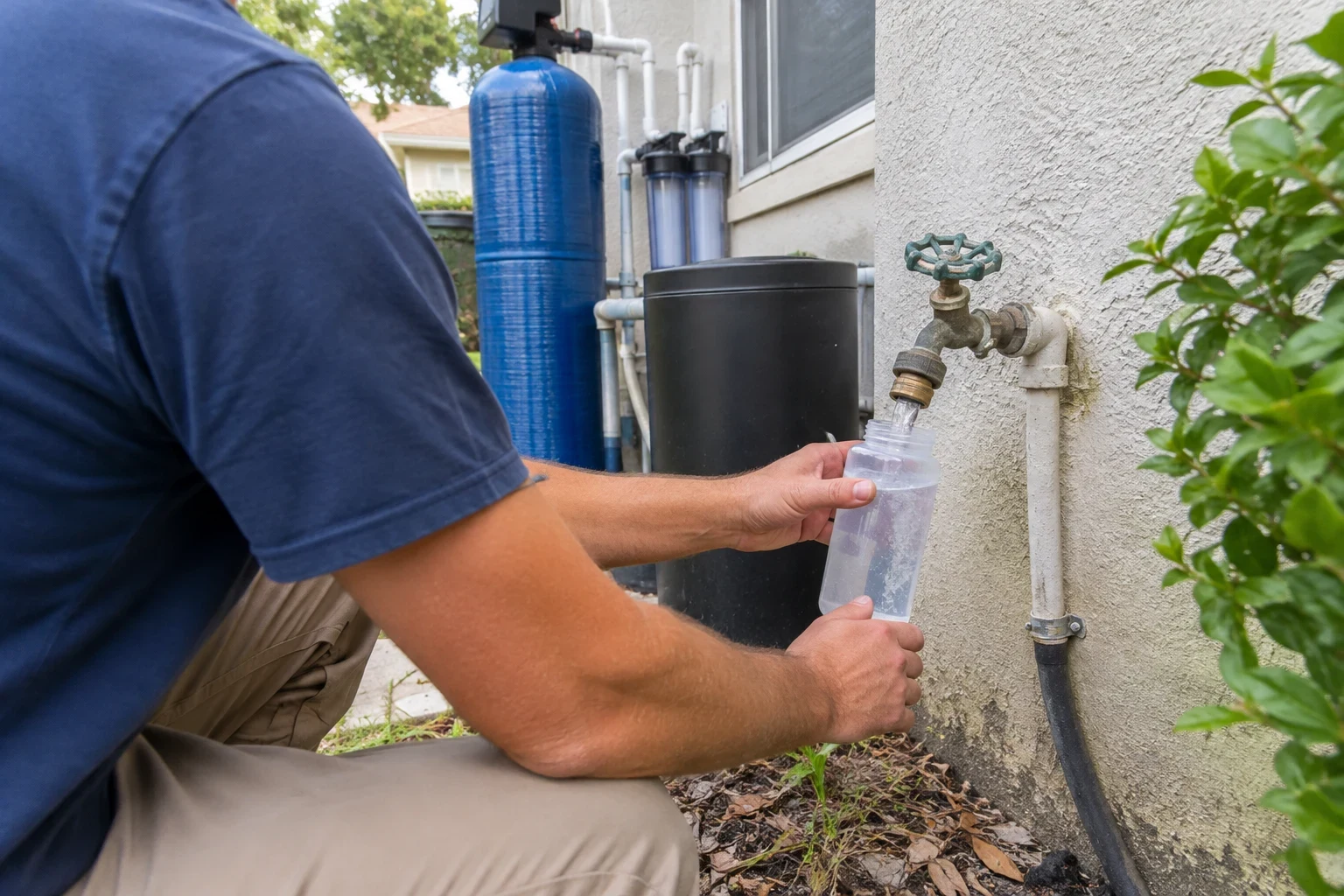
So we start by finding out which one your utility uses. Your water provider's yearly quality report says so, and we'll go over it with you. Then we size the system to the water your home actually gets.
What you get with this work
- 01
Checking your plumbing first
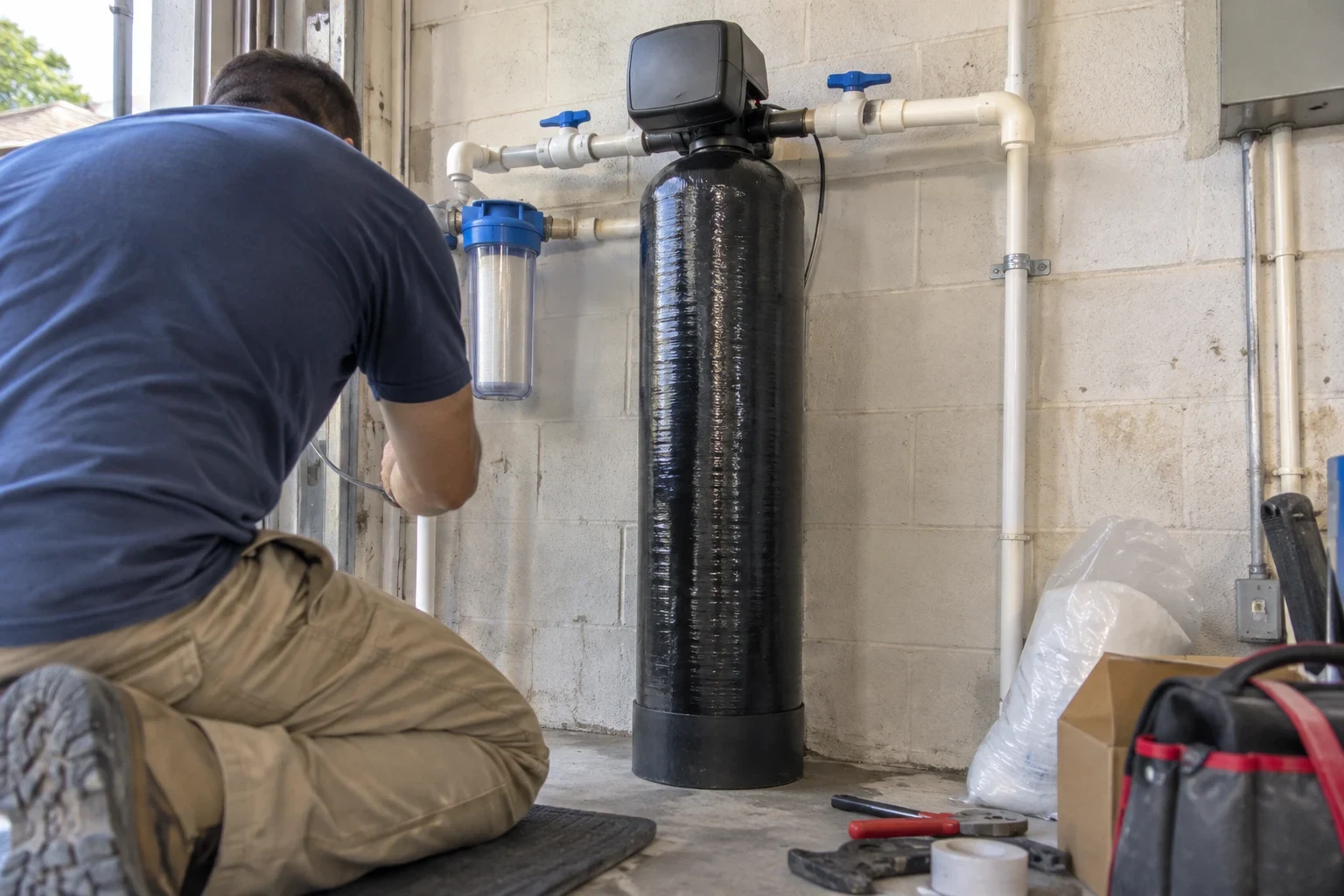
Before we pick out any equipment, we find the spot where city water comes into your home and note the pipe size and pressure. We also look over anything you already have installed. A softener matters here, because chlorine slowly breaks down the resin inside it.
- 02
The right carbon for your disinfectant
Plain chlorine is handled well by a standard activated carbon tank. Chloramine calls for catalytic carbon, in a tank sized so the water stays in contact with it long enough.
- 03
Treatment at the main line
We mount the system where water enters your home, so faucets, showers and appliances all get filtered water. A bypass valve goes in too, which lets you take the tank offline for service while the rest of the house keeps its water.
- 04
Optional kitchen drinking water
If you'd like a separate system for drinking and cooking, our reverse osmosis units have carbon stages built in and work well alongside whole-house treatment.
- 05
Cleanup and a walkthrough
We haul off the old fittings, boxes and damp rags. Then we show you the bypass and shutoff valves and go over the upkeep, so nothing about it is a mystery down the road.
Questions about Chlorine & Chloramine Removal?
Call(813) 358-6770Signs it's time to deal with it
Water smells like a pool
A bleach smell at the tap, especially first thing in the morning, is the disinfectant you're noticing. It's strongest when water has sat in the lines.
Coffee and tea taste off
Chlorine and chloramine flatten the taste of anything you brew. Many people notice it in ice cubes too.
Dry skin and hair after showers
Hot water releases more chlorine into the air and onto your skin. Some people feel the difference within a few days of filtering it out.
Your current filter isn't helping
If you put in a carbon filter and still taste it, the water may carry chloramine and the media or tank size may be wrong for it.
Fish tank or rubber parts trouble
Chloramine is hard on aquarium fish and can wear rubber washers and seals faster. If you keep fish, this is worth sorting out.
How a job goes
- 1
Start with a phone call
Tell us what you're noticing and what equipment you already have. We set a time to come out.
- 2
We look before we recommend
We walk the plumbing, check pressure and the space near the main line, and review which disinfectant your utility uses. Then we tell you what we found in plain words, including when a smaller fix would do.
- 3
Written plan
You get the system size, the media and the work listed out before anything is installed. No pressure to decide on the spot.
- 4
Install day
We're usually done well before evening. You'll lose water only briefly while we cut into the main line. Then we run the new tank to waste so loose carbon dust never reaches your taps.
- 5
Support after
We offer ongoing customer support for maintenance, filter replacements, and service needs. Call when something seems off or upkeep is due.
What sets the cost of a system
Every house is plumbed a little differently, so we look at yours before we put a number on it. Four things do most of the work in setting the cost. Each one shows up as its own line in the written plan we hand you.
- Chlorine or chloramine
- Chloramine needs catalytic carbon and usually a larger tank, which costs more than a standard carbon system.
- Household size and flow
- More bathrooms and more people using water at once mean higher flow. The tank has to be big enough to treat water at that rate.
- Plumbing and access
- A main line that's easy to reach in the garage is a simpler job than one that needs rerouting or extra fittings. Older pipes may need some repair where we tie in.
- Add-ons
- Pairing with a softener, a sediment pre-filter or an under-sink reverse osmosis unit adds to the total.
Questions about chlorine and chloramine
Is chlorinated city water unsafe?
No. The disinfectant is there to keep water safe as it travels to you. Removing it at your home is mostly about taste, smell and comfort. We won't tell you your water is dangerous to sell you a system.
How do I know if my water has chloramine?
Your water utility publishes a yearly water quality report that names the disinfectant. We'll go over it with you during our visit so the system matches what's in your water.
Will my pitcher filter or fridge filter handle chloramine?
Usually not well. Those small filters hold very little carbon and give the water very little contact time. They may cut the chlorine taste, but chloramine tends to pass through.
Do I need this if I already have a water softener?
A softener doesn't remove chlorine or chloramine. The disinfectant actually breaks down softener resin over time. A carbon tank installed ahead of the softener protects it and fixes the taste problem too.
How long does the carbon last before it needs changing?
Two things decide it: the size of the tank and how much water your home goes through each day. A large tank serving a small family can go a long stretch between changes. We'll give you an honest estimate for your own setup, and keeping track of it is part of the ongoing support we offer for maintenance and filter replacements.
Find out what's in your pipes
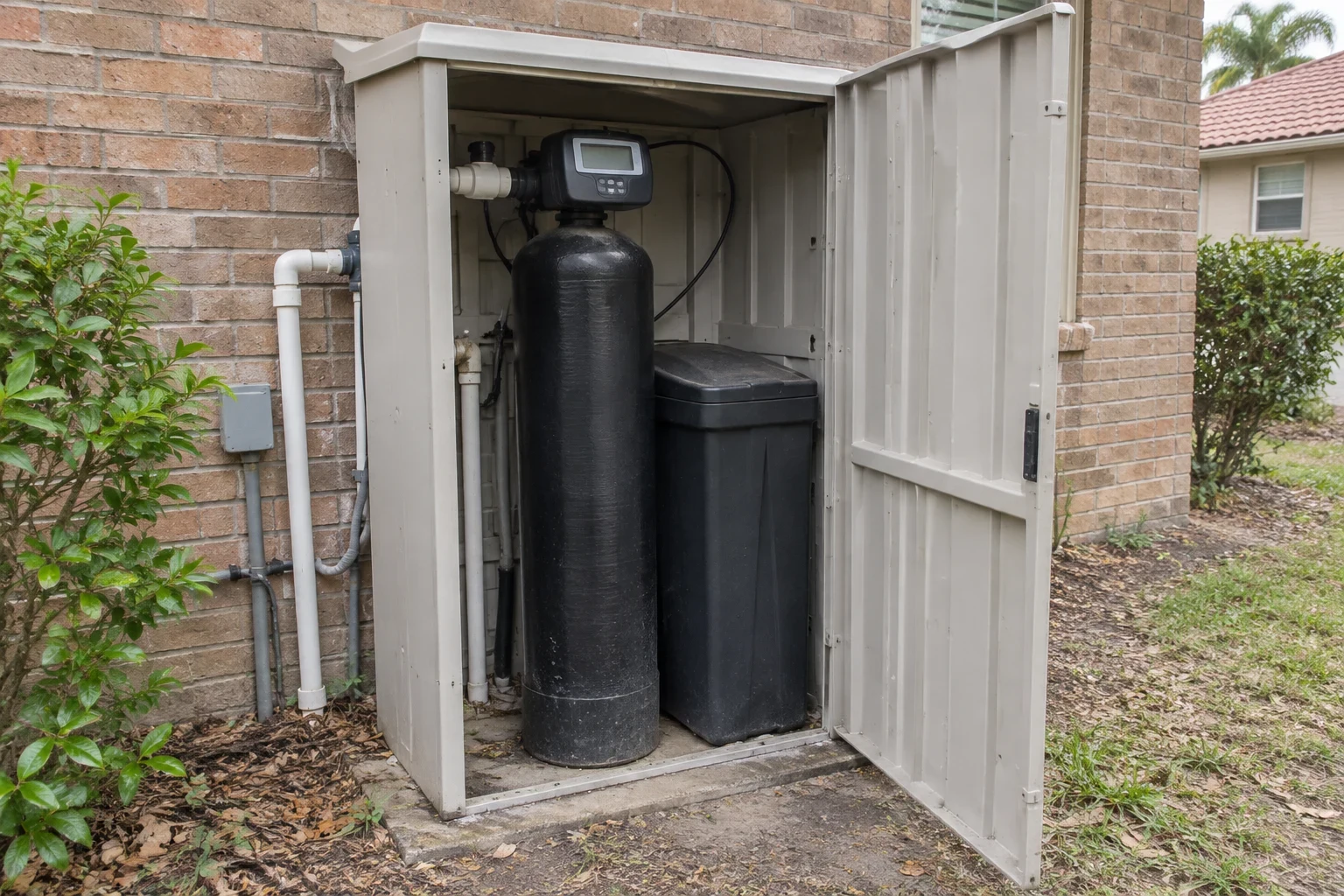
We'll come look at your setup, tell you what we see and explain your options. No sales push, just straight answers.