ServicesWater Softeners
Water Softeners in Oldsmar
Chalky faucets, spotted glasses and a water heater that pops and rumbles are classic hard water clues. We come by, look at where minerals are building up, and give you a straight answer on whether a softener earns its keep before we size and set one.
How a Softener Works and When It Fits
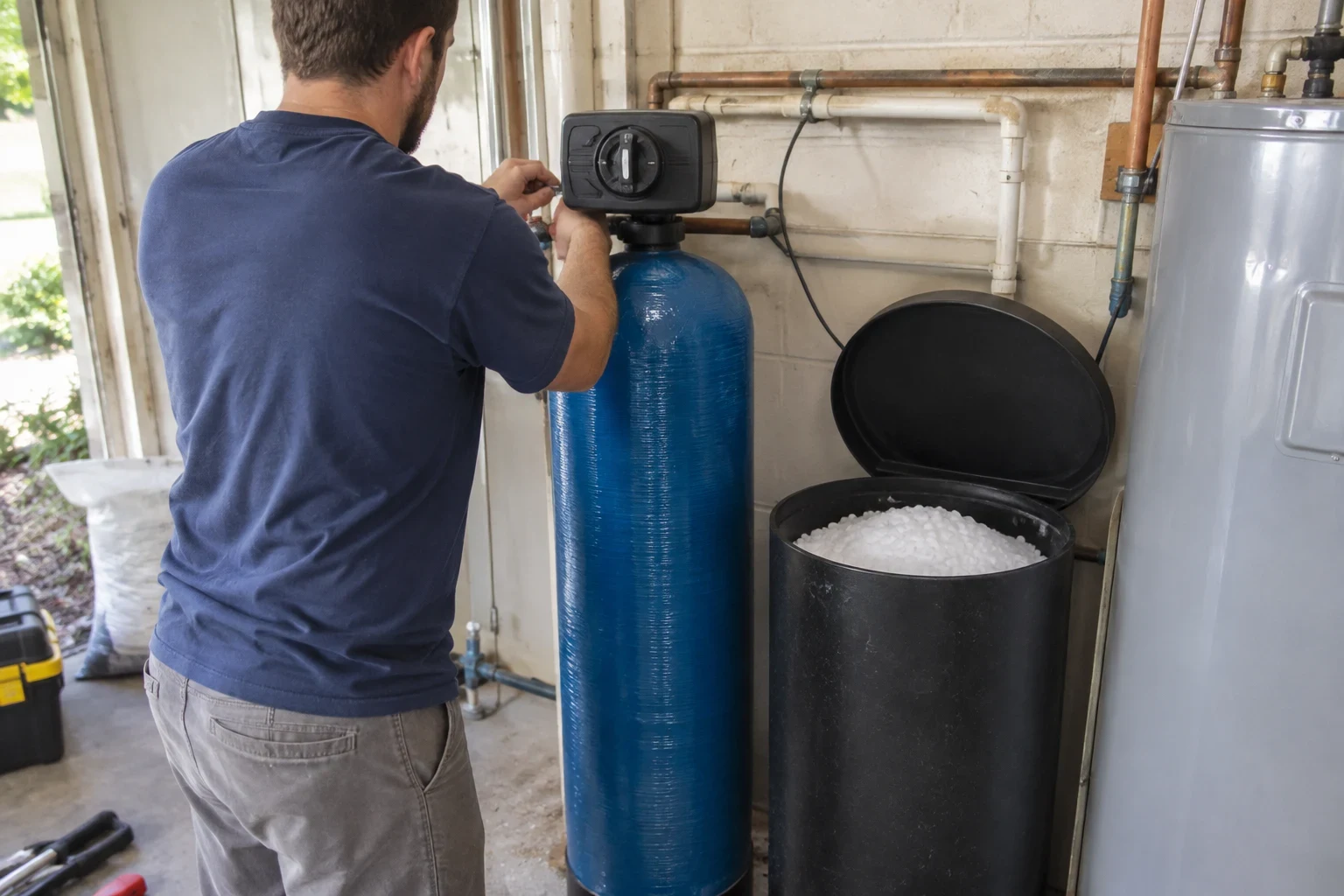
A water softener pulls calcium and magnesium out of your water and puts a small amount of sodium or potassium in their place. The work happens in a tank of resin beads. Once the beads are loaded with minerals, the unit rinses them with brine from a salt tank and goes back to work.
Groundwater around here passes through limestone, so scale is a common gripe. Common is not the same as needed in every house. Some homes really have a taste or odor issue, and whole-home filtration or chlorine and chloramine removal is the better fix. We look before we suggest anything, and we tell you what we saw.
When a softener does fit, we match its size to how many people use the water and put it in a spot that is simple to live with and simple to service.
What You Get With Our Softener Work
A look around your home
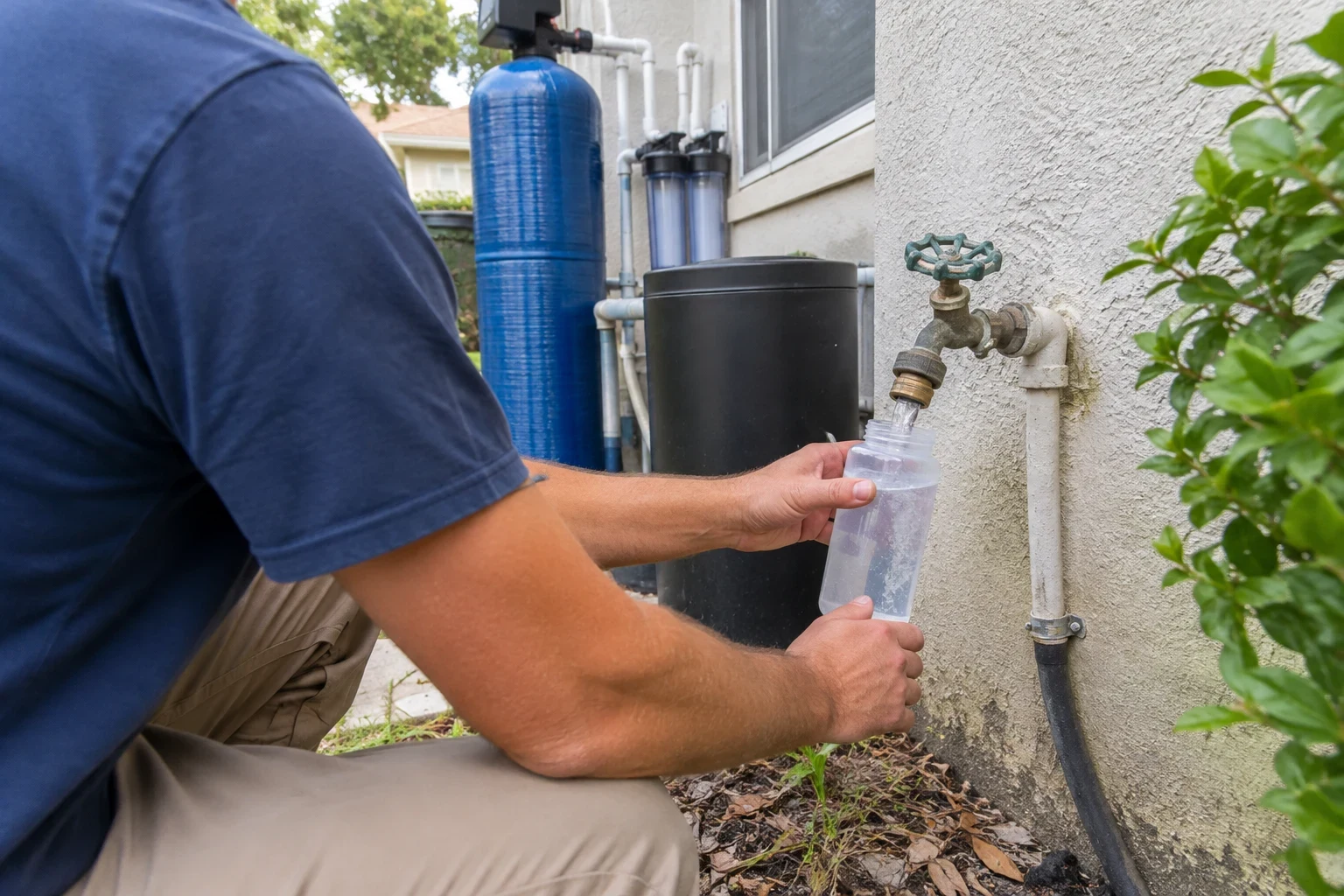
We check for scale on fixtures, shower glass and aerators, look at your water heater and any equipment already in place, and ask how many people live there. You get our findings first, then any suggestion.
The right size for your use
Too small a tank regenerates over and over and burns through salt. Too big a tank sits unused and the resin can go stale. We size it off your household, not off what we have on hand.
A tidy install with a bypass
We connect to your main line and put in a bypass valve, so you can take the softener out of the loop and still have running water. The drain line gets run correctly. Most units end up in the garage or near where the main line enters.
Programming and a quick tour
We set the regeneration schedule, fill the salt tank, and walk you through checking salt, flipping the bypass and reading the control head. A few minutes now spares you a lot of guesswork later.
Help after we leave
We offer ongoing customer support for maintenance, filter replacements, and service needs. If anything seems wrong, there is one number to reach us.
Clues That Hard Water Is a Problem in Your Home
- Chalky buildup on fixtures
- White crust on faucets, showerheads and the base of the toilet is left-behind minerals. You clean it off, and a few weeks later it is back.
- Spotted dishes and shower glass
- Cloudy glasses out of the dishwasher and a film on the shower door are both common marks of hard water.
- Noisy water heater
- A tank heater that crackles or knocks while it heats may have a layer of scale on the bottom. That layer keeps the heat from reaching the water, so the heater runs longer and your energy bill goes up.
- Soap that barely suds up
- Minerals keep soap from lathering. You end up using more shampoo and detergent, and your skin or hair may feel dry or filmy after a shower.
- Weak flow at certain taps
- A clogged aerator or showerhead can be packed with scale. We check whether minerals are the cause or something else in your plumbing is.
How a Softener Job Runs
- 1
The phone call
Tell us what you are noticing and how many people live in the house. We pick a time to stop by.
- 2
Inspection and what we found
We look over your home, show you what we saw, and tell you whether a softener makes sense. If it does not, you hear that too, along with what could help.
- 3
Your written estimate
The estimate lists the unit, the parts and the labor line by line. Nothing new shows up on install day unless you approve it.
- 4
Installation
We shut your water off briefly while we tie into the main line. Floors get covered, the tanks get set, the drain gets run, and we check every joint for leaks. We clean up before we go.
What Changes the Cost of a Softener
No two installs are quite the same, so we put a number on the job only after we have seen your home. The written estimate breaks out the unit, the fittings and the labor so you can see where the money goes. These are the things that move it most.
- Resin capacity
- A bigger household runs more water through the unit. That takes more resin and a larger tank, and the price climbs with it.
- Main line location
- An open, easy-to-reach line in the garage makes for a short day. A long pipe run or a tight closet means more hours on the job.
- Drain and power nearby
- Each regeneration sends rinse water to a drain, and the control head needs a standard outlet. If either one is far off, we have to bring it closer, and that adds labor.
- Hauling out old equipment
- Pulling a worn-out softener or an old filter adds time and muscle to the visit. If your current unit just needs fixing, our water softener repair and maintenance page covers that.
- Adding filtration at the same visit
- A lot of homes put in whole-home filtration or a reverse osmosis system for drinking water alongside the softener. Doing both on one visit lets them share the plumbing work.
Common Questions About Softeners
- Does my house really need a softener?
- We find that out on the visit. We check the scale on your fixtures and water heater and listen to what is bugging you. If the trouble is taste or odor instead of minerals, a softener will not solve it, and we will say so.
- Does softened water taste like salt?
- Most folks never notice it. The unit trades a small amount of sodium for the minerals it pulls out. If you want drinking water without that, a reverse osmosis system under the kitchen sink removes most of it.
- What do I have to do to keep it running?
- Mainly keep salt in the brine tank. Look in about once a month and add more when it runs low. Now and then salt can harden into a crust, called a bridge, and we will show you how to break it loose.
- Where in the house does it get installed?
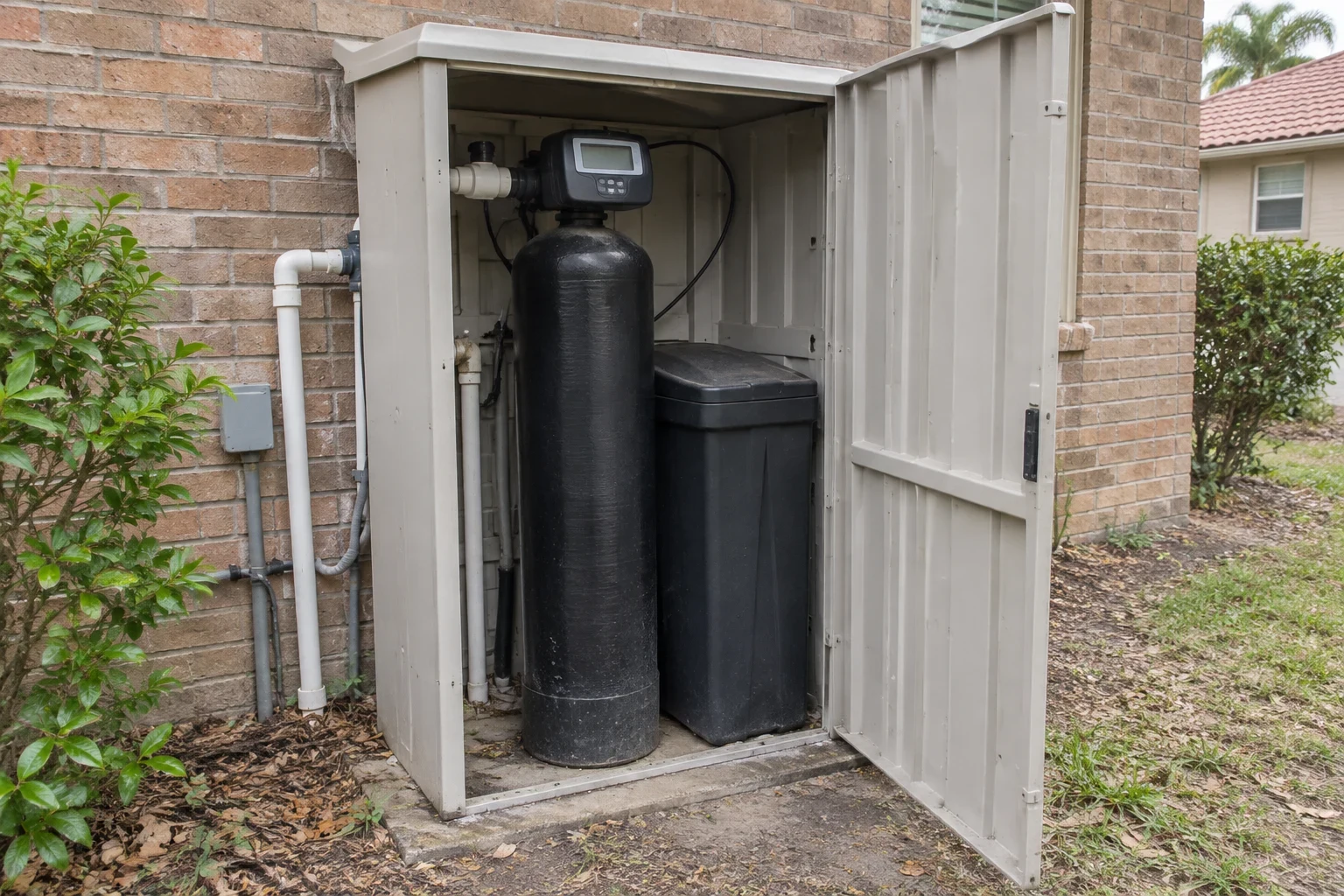
- Most of the time in the garage or close to where the main water line comes in. It needs a drain and a regular outlet within reach. We look over your layout during the visit and choose the neatest spot.
- Will a softener work alongside my whole-home filter?
- It will. The filter normally sits first in line to catch chlorine and sediment, and the softener comes after. Set up that way, the resin holds up longer.
See What Hard Water Is Doing at Your Place
We serve Oldsmar and nearby towns like Palm Harbor, Westchase and Safety Harbor. We will look first and tell you straight whether a softener fits.